Official game
Play Sealbreakers
This game is hosted by Steam. Continue to the official page to play or download it.
Wishlist on SteamOverview
Sealbreakers is a top-down 3D roguelite beat 'em up from Fire Sparrow Studio, a three-person team from Kyiv with AAA background. You are the knight of the Faceless Order, a disgraced brotherhood that once swore to protect the Chaos Seals. They failed. The Seals were corrupted and reality fractured across time and space. As punishment the Order swore never to touch a weapon again, disappearing into the shadows to train empty-handed. When a stranger offers one last chance at redemption, the Order sends you to hunt down four immortal tyrants, the Guardians, each bound to a corrupted Seal and each ruling a different era of the broken world. You fight from the ancient past to a cyberpunk future to break every Seal.
The hook is total: no weapons, ever. The combat is pure hand-to-hand, built around fast, crunchy, weighty brawling. Every run starts with a fighting stance and basic techniques, then your moveset grows room by room as you pick new punches, kicks, and finishers. The game rewards both aggression and patience, and the discipline system makes no two warriors come out the same.
Who it is for: beat 'em up veterans who grew up on Streets of Rage and Double Dragon, roguelite players who love build variety, and anyone who enjoys timing-based crowd control.
Who it is not for: players who want ranged options, deep narrative, or a slow pace. Sealbreakers is dense, fast, and demands constant attention to positioning.
| Fact | Detail |
|---|---|
| Developer | Fire Sparrow Studio (Kyiv, Ukraine) |
| Genre | Top-down 3D roguelite beat 'em up |
| Platforms | Windows |
| Release | Upcoming (wishlist on Steam) |
| Campaign | Break four Chaos Seals, defeat four Guardians |
| Run structure | Stance + basic moves, then pick moves per cleared room |
| Resource | Rage fuels specials; autocasts trigger from combat actions |
| Playtest status | Public playtests run through Ukrainian Games Festival |
| Min specs | i3-8100 / Ryzen 3 1300X, 12 GB RAM, GTX 1060 / RX 580, 10 GB |
| Rec specs | i5-7600K / Ryzen 5 1600X, 16 GB RAM, RTX 2060 / RX 5700 XT |
Getting Started: The First 30 Minutes
- Accept the no-weapon rule completely. There is no sword hidden in a corner. The class fantasy of the Faceless Order is the entire combat identity, and every technique from rapid jabs to magic-charged haymakers is unarmed. Do not waste a run looking for loot.
- Learn the beat 'em rhythm before the builds. Pull enemies together, break the crowd, then isolate the survivors. Rushing into a pack gets you surrounded. The arena punishes split attention harder than anything else.
- Watch how enemies enter. Some rush straight at you, others hang back and flank. Identify the two groups in the first seconds of a room. That single read decides whether you clear cleanly or get buried.
- Spend rage deliberately. Specials cost rage, so they are an economy, not a combo button. A special used on a crowd that is already breaking apart is rage wasted. Save the big hits for when they reshape the fight.
- Do one clean parry per encounter. The parry is the highest-skill, highest-reward tool in the game. Land one and you convert an enemy attack into a cinematic finisher, which swings the momentum of the whole room.
- Join a playtest if you can. The game runs frequent public playtests, and the current build includes disciplines, elites, and the first taste of story. Hands-on time before launch is the fastest way to learn the rage and autocast loops.
Beginner Mistakes to Avoid
| Mistake | Why It Hurts | Fix |
|---|---|---|
| Button mashing | Drains your fists and your rage, leaves you open in crowd fights | Chain deliberate combos; reset when surrounded |
| Grabbing a heavy | Heavier enemies deny grapples and send you flying instead | Check enemy weight before reaching for the grab |
| Ignoring flankers | Ranged and flanking enemies chew through careless clears | Remove hang-back enemies first, then compress the main group |
| Dumping specials on stragglers | Rage is scarce; specials are for reshaping fights | Use specials at the right crowd size, not on single survivors |
| Sticking to one discipline | Disciplines are archetypes, not cages; mixing creates the strongest runs | Read each unlock against what you already have |
| Never parrying | Parries convert enemy momentum into finishers and free autocast triggers | Force one parry attempt per encounter until it clicks |
| Hoarding meta currency | Between-run upgrades make every later run easier | Invest in the Faceless Knight's health, speed, and damage early |
Core Mechanics Explained
Rage, Specials, and Autocasts
The resource layer sits on top of the brawling. Specials cost rage, which builds as you fight, so there is a real economy to every big move. Autocasts are the second layer: passive effects that trigger automatically when you do specific combat actions, like landing a certain type of hit, pulling off a parry, or finishing a takedown. The design intent is synergy. Specials and autocasts can combine powerfully both within one discipline and across different disciplines, which is why run building matters so much.
Disciplines: The Heart of Every Run
Disciplines are elemental archetypes that shape how a run plays. Each bundles a set of special moves you pick up as you progress plus its own autocast layer. Four are known:
| Discipline | Identity | Known Specials | Autocast / Passive |
|---|---|---|---|
| Electro | Fast, aggressive, chaotic | Lightning discharge, electrified dash, rapid combo | Charge builds on enemies as they take hits; at full charge it discharges |
| Fire | Visceral, explosive | Flame Cannon, ground slam that launches crowds | Burning hand adds damage on hits; Burning Ground leaves a lingering burn zone |
| Shadow | Space and time manipulation | Dark chasm traps that pull enemies in | Companion shadows that fight alongside you |
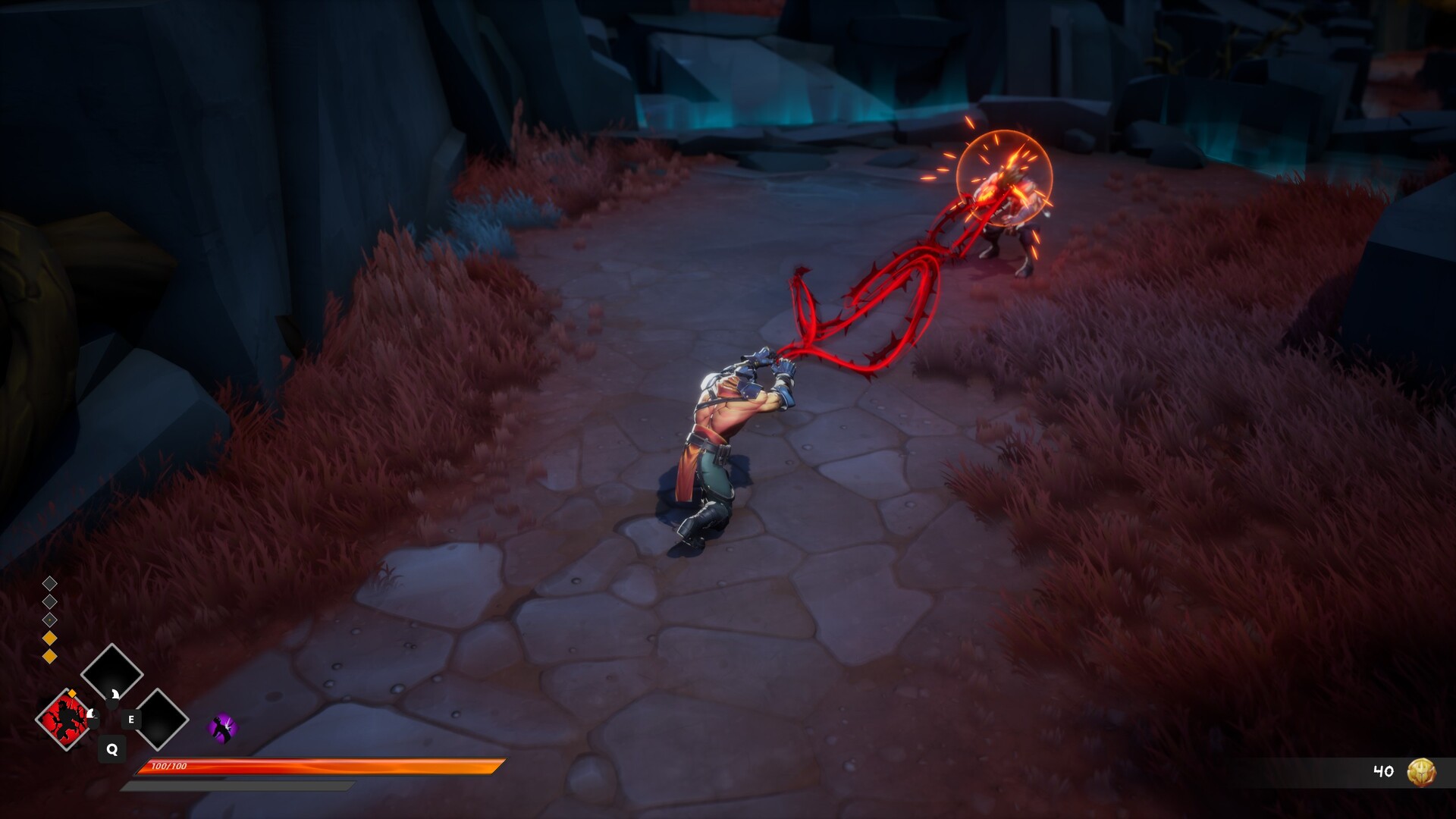
| Blood | Aggressive, close-range control | Blood Spear harpoon that yanks enemies to you | Bleed stacks on wounded enemies, worsened by movement; Congealed Blood erupts spikes |
The Crowd-Control Triad
The combat runs on classic beat 'em up logic with a twist. First, compress: pull enemies together so your area hits catch more than one target. Second, break: use a special or a charged autocast to crack the cluster. Third, isolate: after the crowd breaks, fight the survivors one at a time. The parry feeds this loop by turning an enemy's attack into a finisher, which both deletes a threat and buys breathing room.
Grapple Denial and Enemy Weight
Not every enemy can be grabbed. Heavier enemies deny grapple attempts, catch you, and send you flying. The throw is still the fastest way to control or finish a single target, but you must read enemy weight before reaching for it. Grabbing the wrong guy is a punish, not a mistake. This one mechanic keeps the brawling grounded and stops the cheese of ragdolling every giant.
Environmental Interaction
The world fights back and with you. Objects can be picked up and hurled at enemies, breakable scenery collapses mid-fight, and some objects take multiple hits before they go down. Fight locations matter: the same fight plays differently in a narrow street, a shrine interior, or an open arena because the environment gives you different throwables, cover, and wall-slam opportunities.
Elites and the Executor
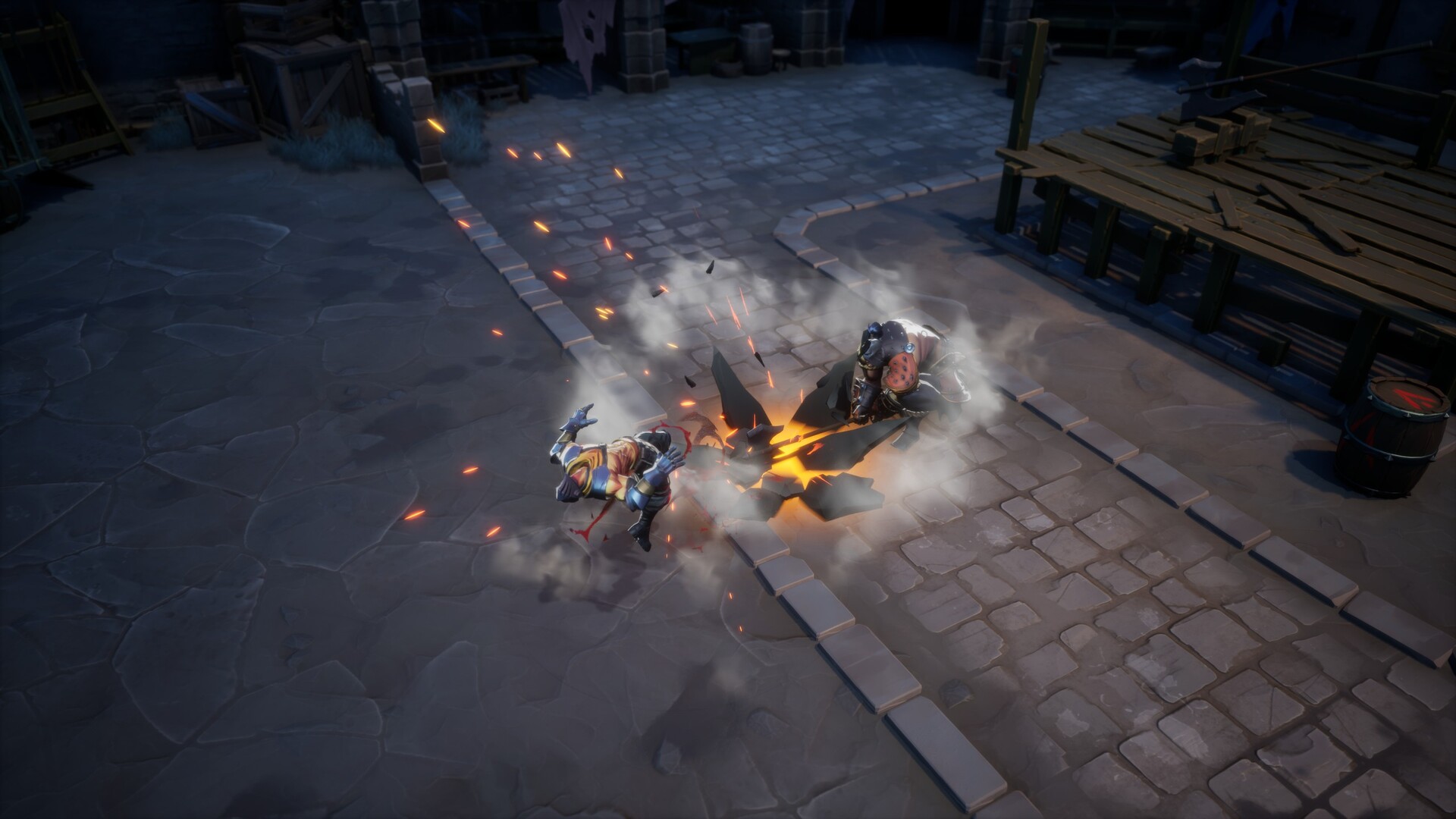
Elites sit above regular enemies. The first named elite is the Executioner, a brute-guy on steroids swinging a massive axe. He hits like a truck and demands respect, and he is designed to recalibrate confidence after you get comfortable manhandling regular heavies. The Crow gauntlet, an optional 2-3 enemy arena, is the game's skill-check side content; playtest players attempted it 11,000 times and only cleared it 721 times.
Meta Progression
Between runs you unlock new fighting stances and upgrade the Faceless Knight to hit harder, move faster, and live longer. Meta progression is the glue that makes early failures meaningful: every run feeds the permanent power curve, and new stances open entirely different playstyles. Invest early and consistently, because the later Guardians assume a baseline of upgraded stats.
Progression Strategy
- Unlock stances before stats. New fighting stances change how every future run feels, while stats only make the current playstyle stronger. A new stance is a new game; ten percent more damage is a tune-up.
- Spend meta currency on health first. Survivability is the bottleneck in roguelites. Health upgrades let you take more risks per run, which means more clears, which means more currency. Speed and damage come second.
- Learn one discipline to mastery before mixing. Play three or four runs of Electro or Fire until the rage economy and autocast triggers are automatic. Then start blending. Mixing before you understand the base loop produces random builds, not synergies.
- Read every unlock choice against your current build. The offered moves after a room are adapt-or-die choices. If the run handed you three nimble-striker moves, lean into jab speed over heavy haymakers. Synergy beats ideology.
- Prioritize autocasts early in a run. Autocasts are passive value that fire themselves; specials cost rage and need timing. A run that picks up its autocast layer first gets free damage for the whole run, while a run that neglects it fights with one hand tied.
- Respect the boss-run economy. Playtest data showed only 2,000 of 32,000 runs reached the boss and only 600 killed it. The climb to the boss is the real run; treat specials and health as a resource you are saving for the end, not spending on every room.
Builds and Tier Lists
Discipline Tier List
| Tier | Discipline | Why |
|---|---|---|
| S | Fire | Best crowd control in the game. Flame Cannon is the most-used special in playtests (73,000 uses), the ground slam launches whole groups into the air, and Burning Ground zones the floor. The identity is simple and always useful. |
| S | Shadow | Highest ceiling. Companion shadows double your offense, dark chasm traps delete enemies from fights, and the space-time manipulation rewards players who think. Harder to pilot, but the strongest endgame toolbox. |
| A | Electro | Fastest clear speed once the charge loop is understood. The charge-and-discharge cycle rewards good target focus and the electrified dash punishes grouped enemies. Slightly fragile in dense rooms. |
| A | Blood | Best single-target and space control. Blood Spear drags enemies into your rhythm, Bleed punishes mobile targets, and Congealed Blood adds area denial. Less flashy than Fire, brutally efficient. |
Best-in-Slot Moves (from playtest data)
| Move | Type | Playtest Use | Why It Wins |
|---|---|---|---|
| Rapid Strikes | Advanced move | 82,000 uses | The most-used advanced move. Fast, safe, and the foundation of every combo. |
| Flame Cannon | Special (Fire) | 73,000 uses | Heavy, direct, punishing. The easiest special to understand and the one that closes fights. |
| Lightning Chain | Autocast (Electro) | 22,000 picks | The most-selected autocast. Chains between enemies and rewards the compression playstyle. |
The playtest data has a clear lesson: the most-used moves are the easiest to understand and the most readily available. Familiarity beats hidden power in this game's economy. Build around moves you understand, not moves you hope to discover.
Beginner Build Template: "Compression Fire"
Stance: basic. Discipline: Fire. Priority picks: Flame Cannon, ground slam, Burning Ground, Rapid Strikes. Playstyle: pull the crowd together, ground slam to launch them, Flame Cannon the cluster on the way down, then Rapid Strikes the survivors. This build teaches the crowd-control triad, the rage economy, and the autocast layer all at once, and it clears playtest arenas faster than any other beginner setup.
Endgame Build Template: "Shadow Trap"
Stance: parry-focused. Discipline: Shadow. Priority picks: companion shadows, dark chasm traps, space-time specials, Lightning Chain autocast (cross-discipline). Playstyle: drop a chasm trap behind the enemy line, parry the front attacker into a finisher, let companion shadows clean the stragglers while the trap swallows reinforcements. This is the highest-skill build and the one with the most options per fight.
Step-by-Step Strategy
-
The Crowd-Compression Clear (any room): walk the outer ring to bait stragglers toward the center, use a pull-style move to compress the pack, drop a special into the cluster, then clean survivors one by one. This is the highest-efficiency clear pattern in the game and works on every rushing enemy type.
-
The Flanker-First Priority: at wave start, identify the enemies hanging back. They will flank you, and letting them live turns a clean arena into a pincer. Rush the flankers before the rushers arrive, then turn around and compress the main group. This single habit cuts your damage taken per room by roughly half.
-
The Blood Spear Follow-Up: with Blood, hurl Blood Spear at a distant enemy to yank them straight into your position, then catch them with a charged special the moment they arrive. You control where the fight happens instead of chasing. Against elites, yank, bleed, then back off and let the Bleed stacks do the work while you reposition.
-
The Parry-Reserve Gambit (boss opener): enter boss fights with a full rage bar and a calm head. Bosses telegraph big attacks. Wait for the telegraphed swing, parry it, convert the opening into a finisher, then immediately dump your specials into the stunned window. Parry plus special dump is the fastest way to delete a Guardian's first phase.
-
The Executor Respect Routine: the Executioner hits like a truck and cannot be grabbed. Do not open with a grab. Circle him, bait the massive axe swing, punish the recovery, and use breakable objects in the environment as free damage. If he winds up and you are mid-combo, dodge. The dodge has i-frames and is the forgiving alternative to a perfect parry.
-
The Crow Gauntlet Training Plan: the optional 2-3 Crow arena is the best combat teacher in the game. Playtest stats show a brutal 6.5% clear rate, so go in expecting to lose. Use it as a pure parry and spacing gym: one run focusing only on parries, one run focusing only on compression, one run spent learning Crow attack patterns. The skills transfer directly to the main campaign.
Advanced Tips
- Autocasts fire on your habits, so build habits that fire them. Landing specific hit types, parries, and takedowns triggers autocasts by design. If your build has an autocast you like, engineer your play to trigger it: compression for Lightning Chain, parries for any parry-triggered effect.
- Rage is a resource, not a reward. Spending rage on the first crowd you see feels good and loses runs. The boss-run economy is real: playtest data shows the majority of runs never reach the boss, and the runs that do are the ones that saved their big hits.
- The dodge is your parry trainer. Perfect parries are the ceiling, but the dodge's i-frames are the floor that keeps you alive while you learn. Practice both. A player who can do both is unstoppable; a player who only parries dies to fast attacks, and a player who only dodges never gets finishers.
- Use the environment as a fifth discipline. Throwables, breakable walls, and multi-hit objects are free damage and free crowd control. A fight staged near a bench or crate is a fight you are winning before it starts.
- Bleed loves movement. Blood's Bleed stacks get worse for enemies the more they move. Yank and throw bleeding targets, keep them off balance, and the damage adds up without a single extra hit.
- Watch the official trailers. The Ukrainian Games Festival trailer and the combat showreels demonstrate high-level crowd control, Executor fights, and discipline specials. They are the fastest way to see what the combat system can do beyond the basics.
FAQ / Common Mistakes
Q: What is Sealbreakers? A top-down 3D roguelite beat 'em up where a knight of the Faceless Order fights with fists only. You clear rooms, build a unique fighting style each run, and break four Chaos Seals guarded by brutal Guardians.
Q: Can I use weapons? No. The Faceless Order swore an oath never to pick up a weapon again. The no-weapon rule is total and it is the entire combat identity.
Q: What are Disciplines? Elemental archetypes that shape each run: Electro, Fire, Shadow, and Blood. Each bundles special moves plus autocasts, passive effects that trigger from your combat actions.
Q: How do specials work? Specials cost rage, which builds as you fight. They are the heavy hitters of the kit, and the economy around them is the game's core resource management puzzle.
Q: Is there multiplayer? No. Single-player only, per the Steam page and all playtest builds.
Q: Does it have controller support? Yes, full controller support. Gamepad is the recommended input for parry and dodge timing.
Q: When does it release? The release date is not announced. Public playtests run regularly, including through the Ukrainian Games Festival.
Q: Who is the first narrative character? Ishtar, a powerful goddess whose servant you step into the role of. Her introduction came with the festival trailer, alongside the first named elite, the Executioner.
Common mistake: building for a dream loadout. The game offers you choices after every room, and the strongest runs are the ones that adapt. Copied builds from early access videos are worse than reactive builds in your hands.
Common mistake: rage dumping. The first crowd is not the boss. Players who unload specials early dominate rooms and lose to Guardians. Spend like the boss is one room away, because it often is.
Common mistake: grab addiction. The grab-throw is satisfying, and heavy enemies punish it hard. Read the enemy, not the animation. If they denied the grab once, they will deny it every time.
Final Verdict
Sealbreakers is a love letter to the arcade beat 'em up, rebuilt for the roguelite era. The discipline system gives real build depth, the rage-and-autocast economy rewards deliberate play, and the enemy design, from Dual Fangs to the Executioner, keeps every room honest. The no-weapon hook is memorable, the parry system is genuinely skill-expressive, and the Ukrainian Games Festival playtests show the combat already lands with players. If you want a fast, dense brawler with meaningful builds and a wild premise, this is an easy pick. If you need weapons, ranged combat, or a slow burn, skip it.
Rating: 4/5 for its genre.
Screenshots