Official game
Play Alpha Nomos
This game is hosted by Steam. Continue to the official page to play or download it.
Play on SteamOverview: What Kind of Game Is Alpha Nomos?
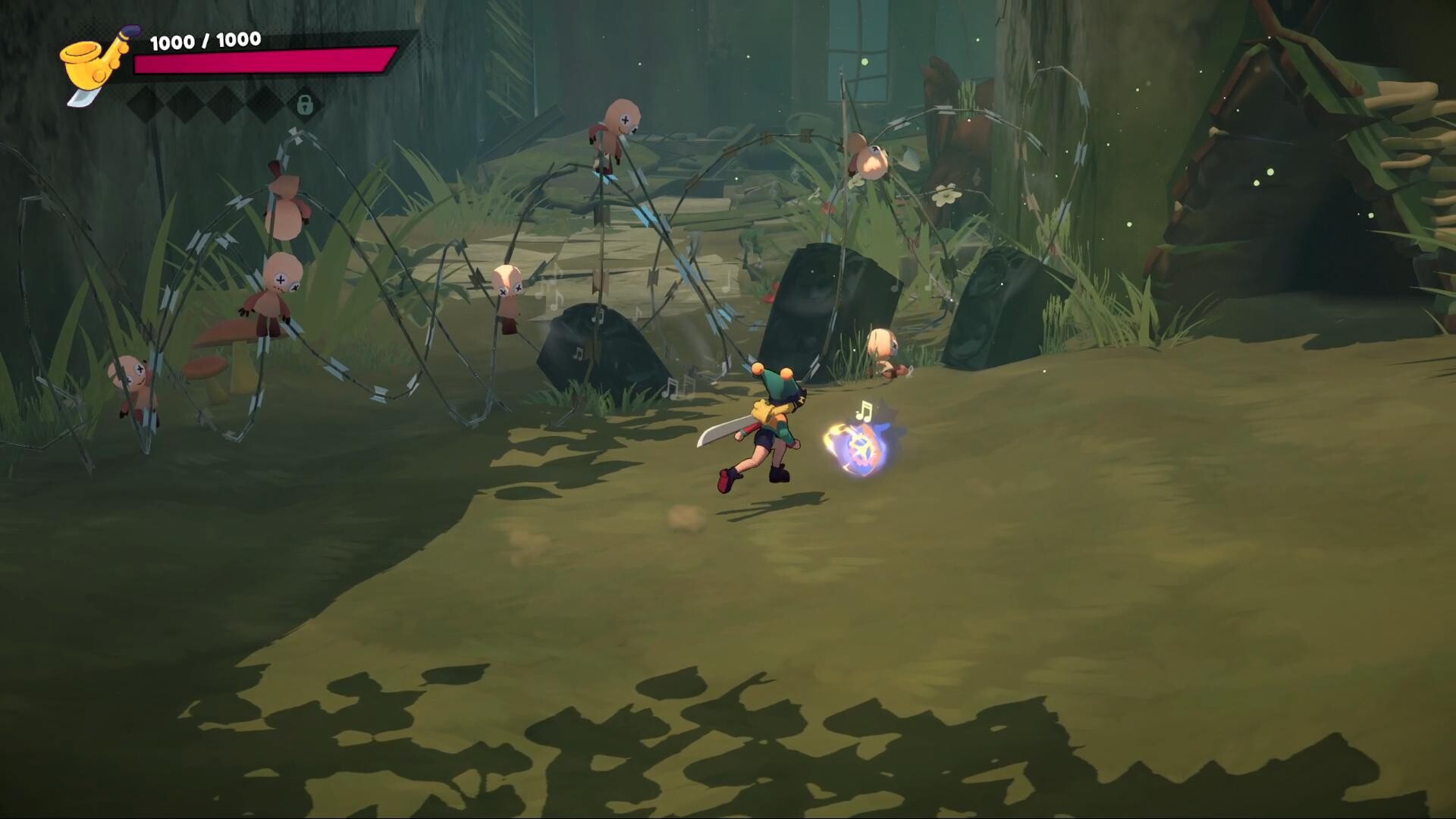
Alpha Nomos is a rhythm action roguelite from RibCage Games, a Finnish studio, that launched October 12, 2026 on PC, PlayStation 5, and Xbox Series X|S for $19.99. You play Cello, a girl hacking through a ruined puppetcore world of broken cities and corrupted circuses, and the entire combat system lives on the beat: every attack, dodge, and ability lands harder when it lands in time with the music.
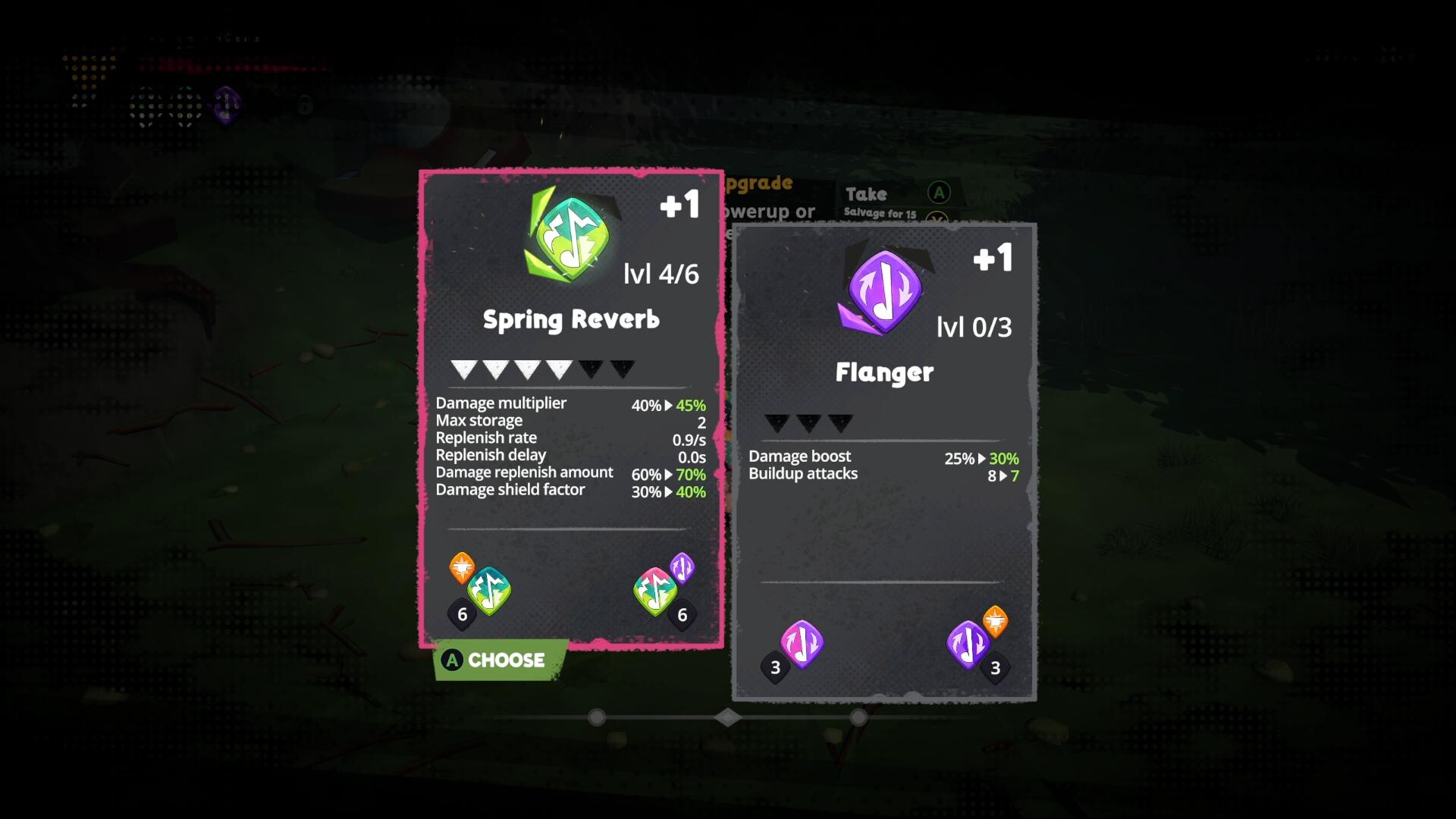
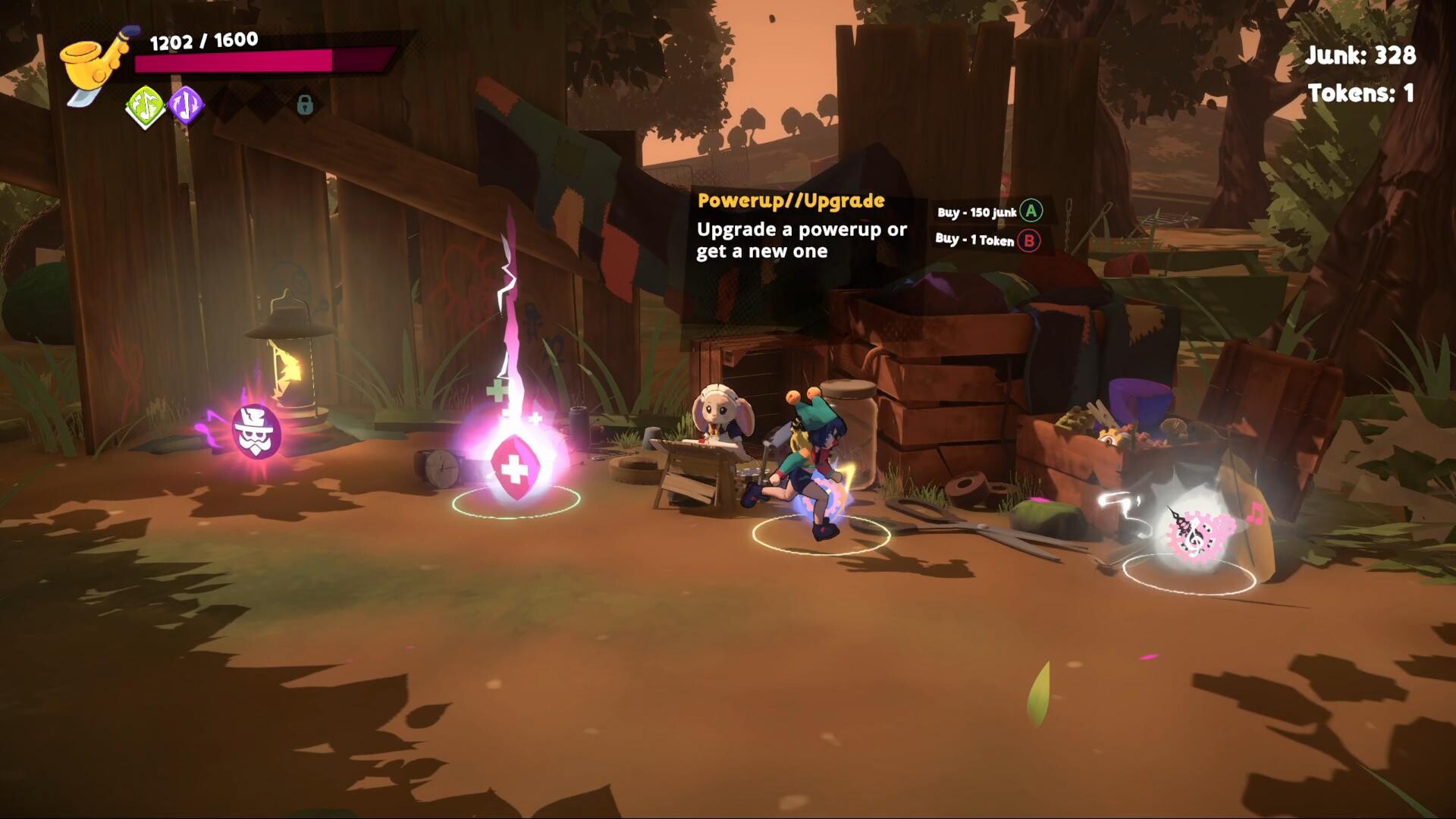
The pitch is Hi-Fi Rush's DNA rebuilt as a roguelite. Runs run 20 to 40 minutes. Between runs you return to a village hub that grows as you rescue lost scrubs, befriend townsfolk, and spend fragments at Maestro's Move Shop. Seven powerups inspired by real-world audio effects (Reverb, Flanger, Delay, and four more) change both how you fight and how your run sounds, and pushing them through three levels evolves them into specialized variants.
| Field | Detail |
|---|---|
| Genre | Rhythm action / hack-and-slash / roguelite |
| Developer | RibCage Games (Finland) |
| Platforms | Windows, PS5, Xbox Series X |
| Price | $19.99, intro discount ends October 25 |
| Runs | 20 to 40 minutes |
| Achievements | 12 |
| Soundtrack | Original score by Totem Warriors, live-recorded instruments |
| Languages | 23 supported, subtitles in all |
| Launch reception | Positive, 29 of 30 launch reviews positive |
The soundtrack is the headline. Weapons are recorded with live instruments, so a real player performs every hit, and your powerup loadout reshapes the music of the run itself. One early reviewer called it "rhythm hack & slash should be a new genre, and it begins with this banger of a game," and the 20,000-wishlist launch backs the sentiment.
Who it suits: players who want action combat with a timing ceiling, roguelite fans bored of stat-check builds, and anyone who liked the idea of Hi-Fi Rush more than its length. Who should hesitate: players who need deep buildcraft for hundreds of hours, and players severely rhythm-averse, though the input settings soften that more than launch reviews suggest.
Getting Started: Your First Two Hours
The first hour is the hardest hour. Your hands have not internalized the beat grid, and the game's opening tempo is higher than most tutorials. These steps flatten the curve.
- Plug in a controller. The game recommends gamepad, and beat timing on an analog stick beats keyboard timing for almost everyone. DualShock and DualSense are explicitly supported, with vibration and remapping.
- Run rhythm calibration before your first real fight. The game auto-triggers calibration if it detects offset during the tutorial, but you can open it manually. Hardware audio latency differs wildly between TVs, monitors, and Bluetooth headsets, and a 50ms offset is the difference between "Perfect" and "Miss."
- Choose your input mode deliberately. Two settings changed the game in a demo patch: "Responsive" favors immediate input registration, "Rhythmic" quantizes your actions to the beat grid. Rhythmic is the purer experience; Responsive is the mercy setting. Try Responsive first if you are new to rhythm games.
- Turn the click track up, the weapon SFX down. Music-contextual click tracks have a controllable volume, and the community's loudest complaint is weapon sounds drowning the beat. Set music and click above SFX in the mix.
- Die on purpose once. Your first run ends early no matter what. Treat it as a calibration exercise: learn the metronome, the dodge window, and how enemies telegraph on the grid.
Early mistakes that cost runs:
| Mistake | Why it hurts | The fix |
|---|---|---|
| Mashing attack | Off-beat hits deal reduced damage and break combo chains | Tap on the pulse; slower is stronger |
| Ignoring the training room | The training room bug (attacks not registering) pushed players past it | If inputs do not register, re-enter the room or swap input mode |
| Spreading powerups thin | Unleveled effects give small boosts | Push one or two powerups to level 2 or 3 per run |
| Playing with music quiet | The beat is your UI; silence is a handicap | Headphones, music volume maxed |
| Skipping fragments | Fragments fund Maestro's Move Shop, your permanent progression | Detour for every fragment node |
| Full-comboing into crowds | Specials knock you off the beat | Single hit or two into dodge, per high-rank players |
Core Combat: The Three Layers of the Beat
Layer 1: Downbeats
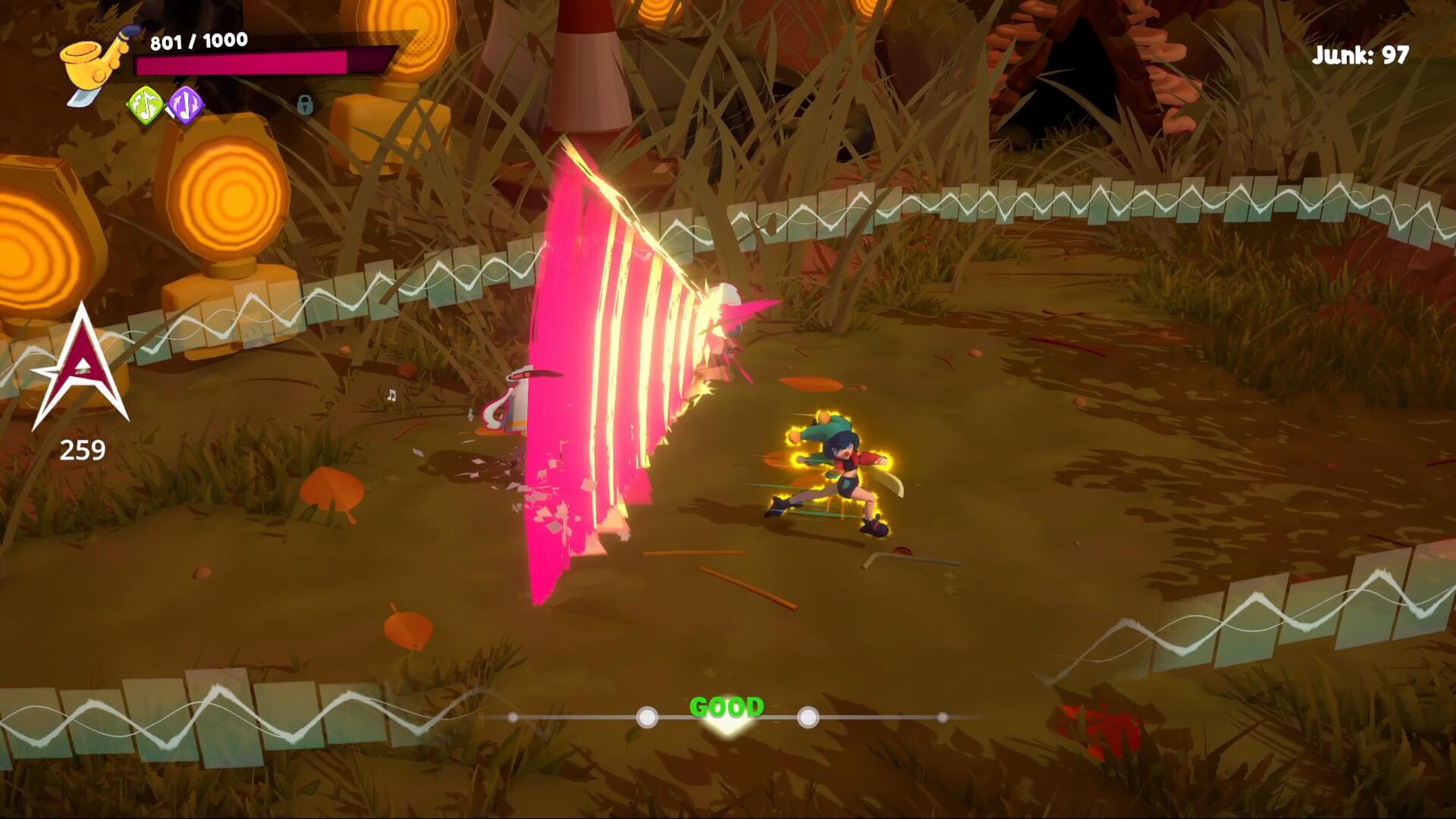
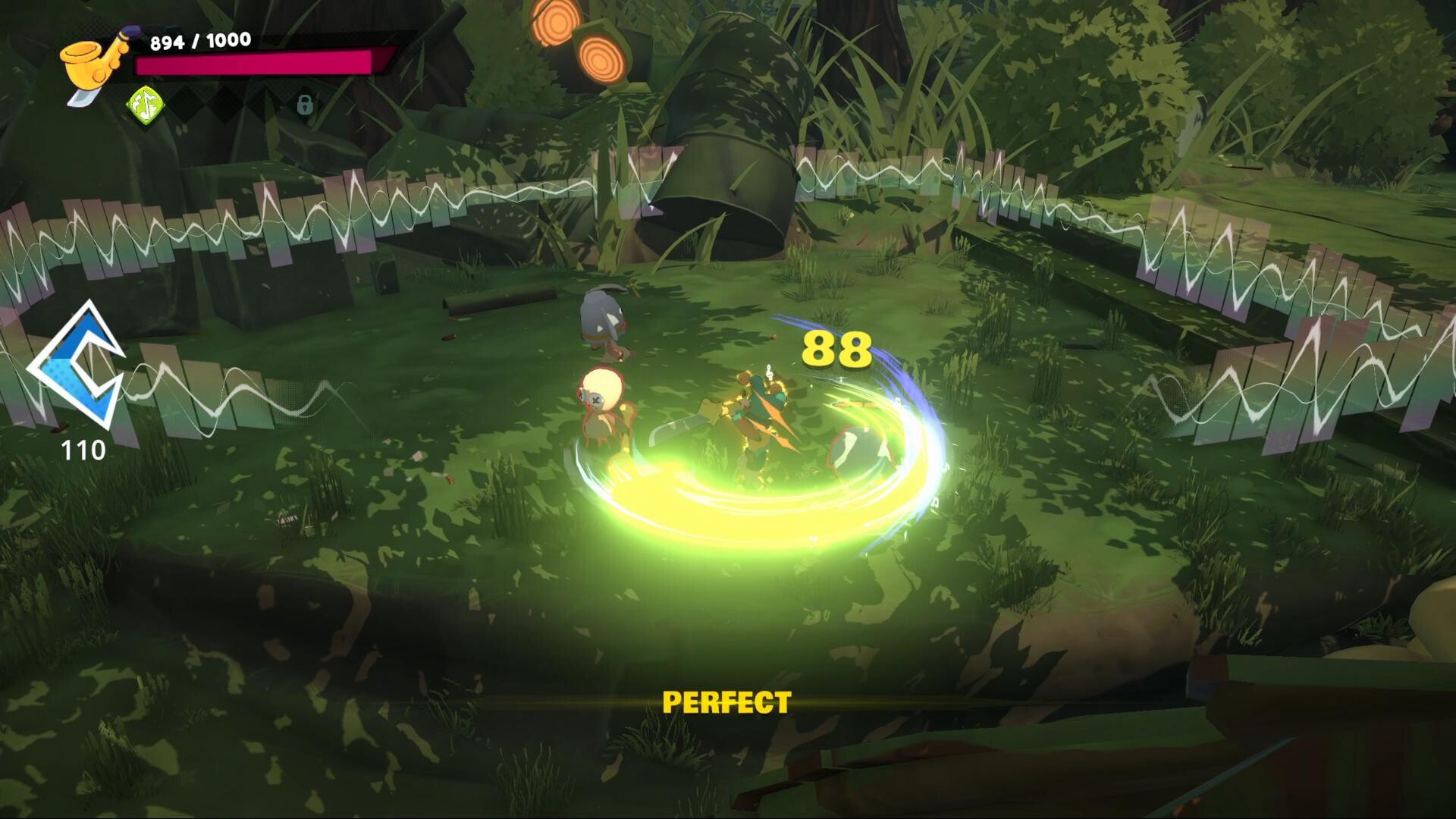
Every strike on the main pulse connects with full damage. This is the baseline. If you only ever learn one thing, learn to hit on the downbeat and dodge on it too. Enemy attacks also land on the grid, which means defense is rhythmic: once you hear an enemy's rhythm, dodging becomes a dance step instead of a panic roll.
Layer 2: Eighth Notes and Rests
The store description says it straight: do not just hit the downbeats; weave quick eighth notes and rests between strikes to unleash punishing combos. In practice, attack strings have speed and breathing room. An eighth-note fill between two heavy strikes keeps the combo meter alive, and a deliberate rest often chains better than a third hit, because the music resets your timing window instead of punishing your speed. Count rests as attacks.
Layer 3: Ranks, Stagger, and the Grade Board
Fights grade you from D to A (and higher) based on beat consistency. Players report holding A-rank by prioritizing single hits into dodges rather than long strings. Special abilities have a real cost: they knock your internal metronome off, which is why the community workaround is to use them sparingly and re-anchor on the click track afterward. Stagger states on enemies (added after demo feedback) read clearly now; a stunned puppet is your window to dump meter without timing risk.
The Honest Caveat: Audio Separation
The most useful critical review of the launch window makes a point worth knowing before you buy: weapon sounds do not fully mingle with the background music. Where Metal: Hellsinger builds its soundtrack around your shots, Alpha Nomos's hits can feel like a separate metronome layered over the track. The practical adaptation is to treat the click track, not the music itself, as your timing anchor, and to adjust the mix until the click sits comfortably above weapon noise.
Powerups: The Seven Effects and How to Build Them
Seven powerups ship at launch, each modeled on a real audio effect, each changing both mechanics and the run's soundtrack.
| Powerup | Real-world effect | Combat character | Best against |
|---|---|---|---|
| Reverb | Echo tails | Attacks ring out with area persistence | Puppet crowds |
| Delay | Timed repeats | Strikes repeat on the beat grid | Rhythmic enemy groups |
| Flanger | Sweeping jet | Movement and attack swirl (reworked in patches for clarity) | Mobile enemies |
| Distortion | Signal break | Raw damage stacking | Boss duels |
| Plus four more | Plugin powerups unlockable | Variety builds (design-competition winners included) | Depends on unlock |
Build principles that hold across runs:
- Depth beats breadth. A level-3 evolved powerup outperforms three level-1s. The evolution system (upgrades unlock special effects that change how the powerup functions, then mutate it into a specialized variant) is where real damage lives.
- Match tempo to weapon. The OwlClaw is faster than the starting kit, which means tighter eighth-note windows and higher combo ceilings. Speed effects on a fast weapon compound; on a slow weapon they mostly waste timing headroom.
- Rebuild per biome. Wide-area effects shine in puppet-crowded rooms. Single-target stacking wins duels. Check the next biome from the village and re-roll your plan before departing.
- The UI shows evolution paths. The overhauled powerup UI displays upgrade tiers and evolution branches, so you can plan a build instead of gambling.
Meta Progression: Maestro's Move Shop
Runs are only half the game. Fragments scattered through the world carry back to Maestro, who trades them for new skills and combos that persist across runs. This is the roguelite spine: even a failed run that banked three fragments moved your account forward.
Fragment priority for the first five runs:
- New combo extenders first. They multiply every later run.
- Skills that widen the dodge window second. Survivability compounds.
- Cosmetic and dialogue-adjacent unlocks last.
The village also tracks two community goals: maxing friendship with a townsfolk, and rescuing every lost scrub. Both tie to achievements, and the townsfolk dialogues double as build advice; they reference powerup synergies you would otherwise discover by accident.
Weapons: The OwlClaw and the Unlock Path
The starting weapon is honest mid-tempo. The OwlClaw, the early headline unlock ("Spreading wings" achievement), plays faster and rewards aggression: tighter timing windows, bigger combos, more risk per missed beat. "Weapon master" (unlock all weapons) is the long-tail achievement.
Adaptation routine when a new weapon unlocks:
- Take it to the combo challenges first, not into a deep run.
- Rebuild your muscle memory at the new tempo.
- Only then bring it into the biome you are farming.
This sequence sounds slow and saves runs. Tempo changes invalidate dodging habits more than damage numbers.
Step-by-Step Playbooks
Playbook 1: Run Zero (Your First Hour)
- Controller connected, calibration run, input mode set to Responsive.
- Music volume maxed, click track at 70 to 80 percent, SFX lowered.
- Tutorial completed on-beat even if slow. Do not skip the beat prompts.
- First run: goal is reaching the first boss, not winning. Bank every fragment seen.
- Spend fragments at Maestro. Start run two immediately while the timing is fresh.
Playbook 2: The A-Rank Loop
- Enter a room. Do not attack. Watch one enemy's attack rhythm for a full loop.
- Single hit into dodge, single hit into dodge. No strings until you hold the pulse.
- Insert an eighth-note fill only when the single-hit rhythm is automatic.
- Use specials only on staggered enemies, then re-anchor on the click for two bars.
- Exit the room on a perfect note whenever possible; it keeps your internal tempo for the next room.
Playbook 3: The Boss (Dolores and Friends)
- Bosses telegraph on the grid but faster enemies bury the tell in the music. Drop the click track volume up temporarily for boss fights.
- Learn phase transitions by dying once. Phase changes reset the beat pattern.
- Between phases, attack on downbeats only. Greed strings cause more boss-run deaths than boss attacks.
- Dolores ("Arachnophobia" achievement) punishes panic rolls. Dodge on the beat even when scared; the timing window is more forgiving than it looks.
Playbook 4: The Evolution Rush
- Pick one powerup in run one and never deviate, even if offers look juicy.
- Take its upgrade at every fork. Level 2 changes function; level 3 evolves it.
- Bank fragments for Maestro between runs. Move Shop skills make evolution targets easier to reach.
- By run four or five you should have your first evolved powerup ("Full potential" achievement).
Playbook 5: The Completionist Route (All 12 Achievements)
- Story achievements first: "A new home?" (arrive at the village) is unmissable.
- "Wrong button?" (salvage a pile of junk) is likely your first, trivially early.
- "Musical adept" (evolve to level 2) during your first serious build run.
- "Full potential" (level 3) by run five with focused upgrades.
- "Speading wings" (OwlClaw) and "Weapon master" (all weapons) through normal play plus fragments.
- "Maestro's favorite" (all compositions) rides on long-term fragment income.
- "A friendly face" (max one friendship) and "Friendly neighbourhood puppets" (all scrubs) require village sweeping; check the map for missed scrubs before pushing endgame.
- "Master of the musical blade" (all combo challenges) last, when your timing is sharpest.
Playbook 6: Rhythm-Struggling Player On-Ramp
- Input mode: Responsive. Click track: maximum. Calibration: manual, twice.
- Play the first biome with the metronome UI as your focus point, not enemies.
- Ignore score until the pulse is automatic. D-rank clears still bank fragments.
- Move to Rhythmic input mode only after you finish runs without thinking about timing.
Advanced Tips
Held inputs fire on the next beat now. Demo patches specifically eased hold-input timing after complaints that charged attacks fired instantly instead of waiting for the next beat. If you learned holds on the demo, relearn them; release timing has changed.
Auto mode misses only on rapid inputs. The assist setting was adjusted so auto no longer punishes normal play, only rapid mash. If you need assist, the current implementation is far less restrictive than launch.
Enemy stun states are your greed license. Since the stagger patch, powerful enemies have visible stun breaks. Meter dumps belong in stun windows; nowhere else.
Dash targets for you. Auto-targeting after a dash exists, and knowing it changes your movement: dashes into crowds self-correct toward the nearest enemy, so dash through packs instead of around them when overwhelmed.
The background moves to the beat, but trust the click. Visual tempo cues are inconsistent per community testing. The HUD metronome had bugs in older builds; current builds fixed them, and the red-dot metronome plus click track is the reliable timing source.
Streaming overhead is real. The one launch performance complaint came from a streamer seeing frame drops after an hour. If you capture gameplay, cap framerate in the new settings menu and watch Vsync; both were added for lower-end GPUs and encoding headroom.
Salvage junk. The "Wrong button?" achievement exists because players ignore salvage piles. Junk converts to fragments, and fragments are meta progression. There is no downside.
Check the achievements page if unlocks stall. Launch players hit a confirmed bug where achievements did not fire; the developer acknowledged it and pushed fixes via Discord announcements. If an achievement visibly should have unlocked and did not, finish the session, then check; retroactive grants followed the fix.
Known Issues and Workarounds
| Issue | Status | Workaround |
|---|---|---|
| Achievements not unlocking | Developer confirmed, fixing | Finish session, check later; join Discord for fix news |
| Training room attacks not registering | Older builds | Re-enter room or swap input mode |
| Ancient coin #2 at waterfalls uninteractable (PS5) | Reported, open | Skip and return after update |
| Mouse cursor trapped in window | Answered by dev | Use controller, or fullscreen borderless |
| Specials knocking you off-beat | By design | Single hits into dodge; re-anchor on click track |
| Font rendering issues | Reported | Verify files; check display scaling |
| Frame drops while streaming | Reported | Cap framerate, adjust Vsync in new settings |
FAQ
Do I need rhythm game experience? No. Calibration, input modes, and the click track exist precisely for players without trained timing. Community consensus: the first hour is the wall, and it falls for almost everyone.
Keyboard or controller? Controller. The game recommends it, and beat timing on an analog stick is the intended experience.
How long is the game? Runs of 20 to 40 minutes, with meta progression stretching across several evenings. All 12 achievements take most players a handful of sessions; the Games Under 5 Hours festival listing reflects the core path length.
Is there a parry or perfect dodge? There is no dedicated parry button. Defense lives on rhythmic dodging; dodging on the beat is the counterplay, and enemy attacks land on the grid by design.
What is the difficulty situation? One core difficulty with assist options (auto mode, Responsive input). The community consensus is that the opening biome plays faster than a tutorial should, and the Balanced tempo is the intended experience.
PC system requirements? Modest: Windows 10/11 64-bit, Core i5-6500 or Ryzen 3 1200, 8 GB RAM, GTX 1050 or RX 560, 15 GB storage for minimum. Recommended tiers scale to RTX 2070 class.
Is it on consoles day one? Yes. PS5 and Xbox Series X|S launched the same day as PC.
Who made the music? Totem Warriors, with live-recorded instruments. The launch store page and developer posts confirm real players behind every weapon sound.
Quick Reference Card
| System | Key fact |
|---|---|
| Combat | Attack and dodge on the beat; eighth notes extend combos |
| Defense | No parry; rhythmic dodge is everything |
| Powerups | 7 audio-effect upgrades, 3 levels, evolution at 3 |
| Input modes | Responsive (forgiving) vs Rhythmic (quantized) |
| Meta | Fragments to Maestro's Move Shop = permanent skills |
| Weapons | OwlClaw early unlock; tempo changes need retraining |
| Village | Rescue scrubs, max friendships, both achievement-gated |
| Bosses | Dolores ("Arachnophobia"); phases reset beat patterns |
| Settings | Calibrate twice, click track up, SFX down |
| Price | $19.99, intro discount ends October 25 |
Screenshots